
Uncollecting the Dead
Part 1 - The Coffins

The following is a reportage in three parts about the reburial of 63 ancestral human remains in March 2026 at Kindelê in Namaqualand, Northern Cape as experienced by the author Rasmus Bitsch, who is a writer and co-producer of the documentary film re:collection about the process (in production).
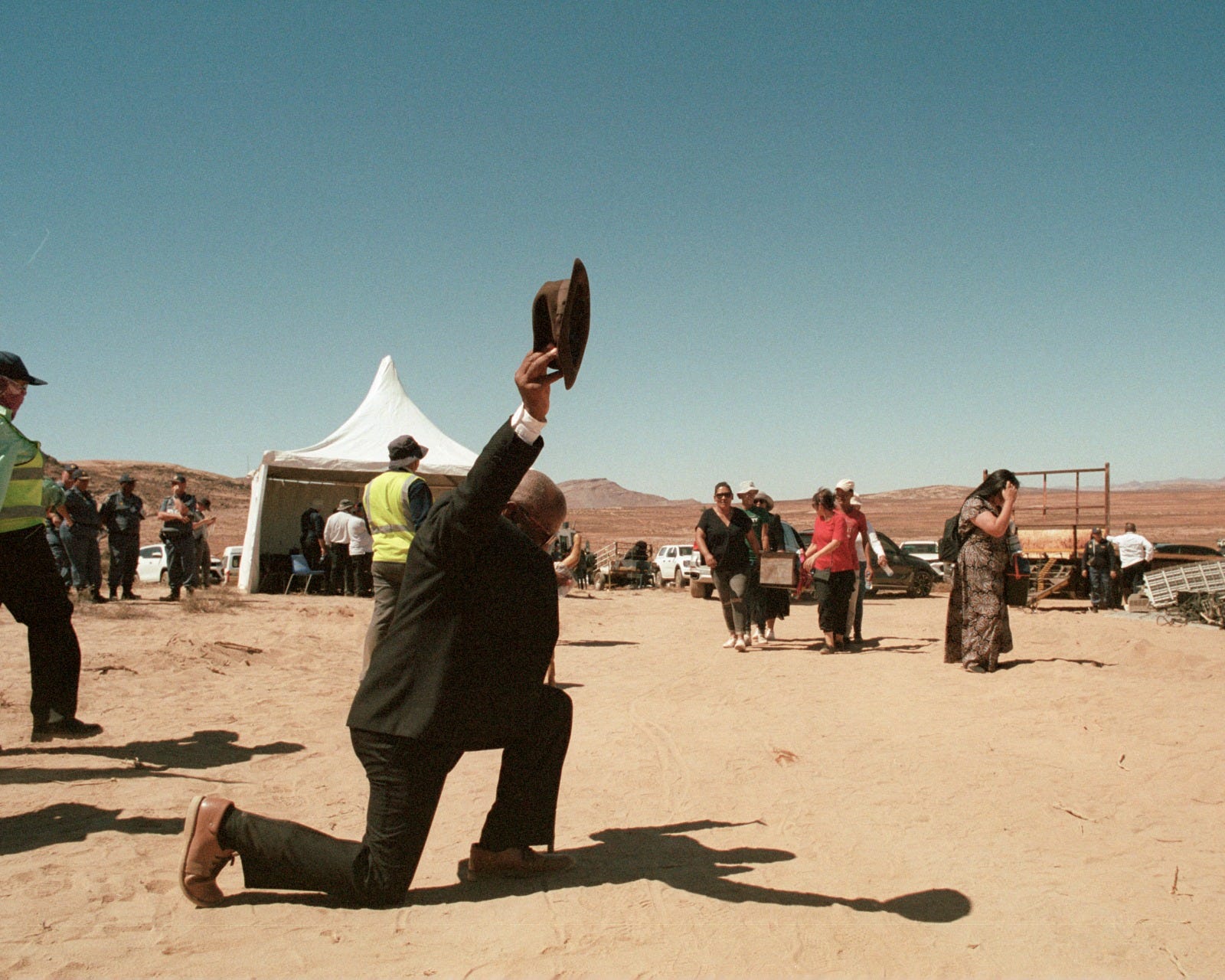
A coffin being carried to the grave in Namaqualand. Photo by Micky Wiswedel
There may be no clearer symbol than a coffin. Unambiguous and final, the presence of a coffin means the end of a life. The coffin itself is a transitionary vessel for a journey in one direction. And while a burial may bring sadness or relief, it is the way a life is meant to end.
But when there is not one, but many coffins in one place, it means something very different.
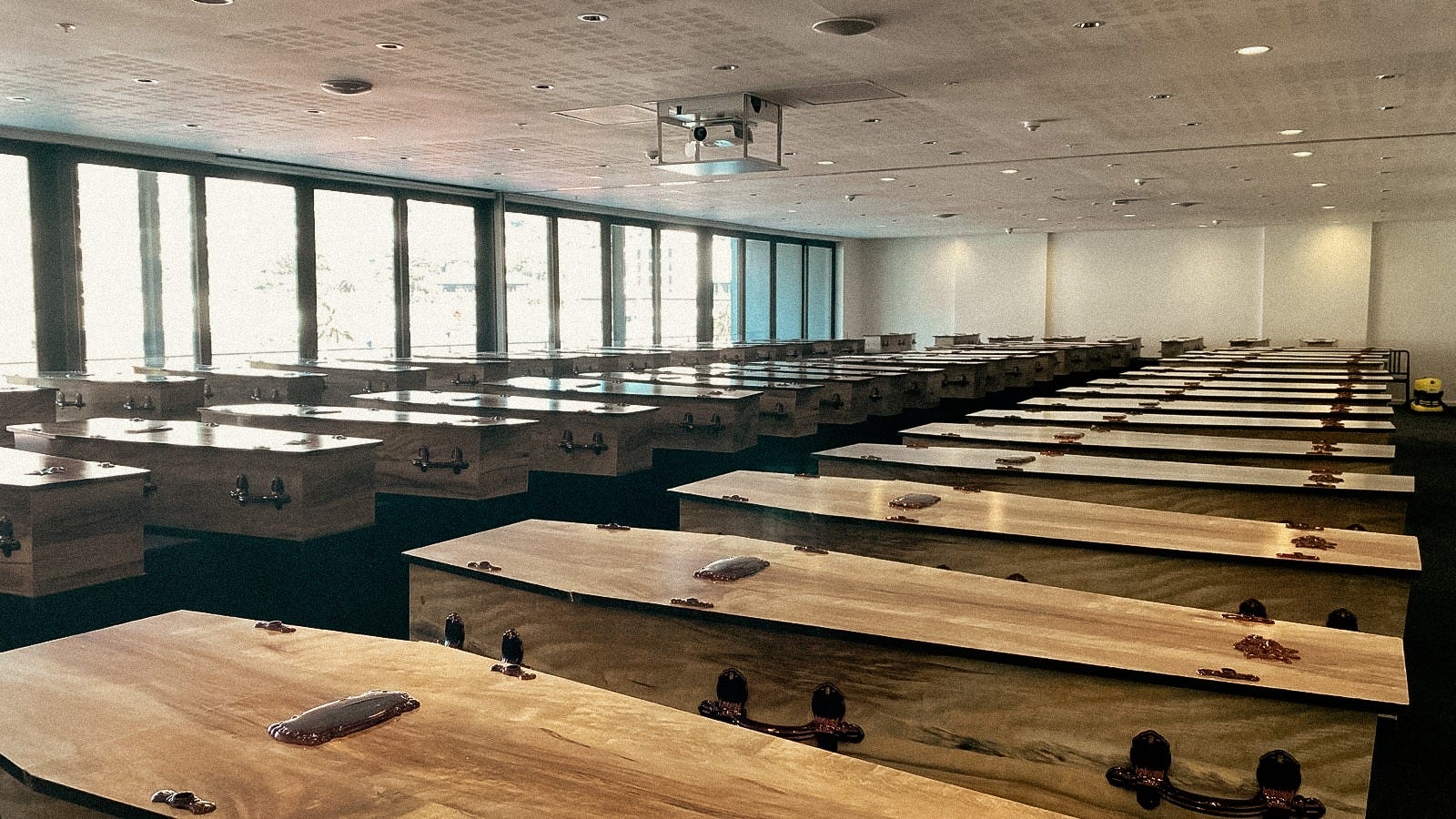
The 63 coffins on the 5th floor of the Iziko South African Museum are still empty on the morning of Saturday March 21st, 2026. The room is quiet, the bright sunshine floods through the windows, but there is nothing soothing about the light. The low humming drone of the aircon feels ominous, another reminder that the job is not yet done, the ancestors are not yet resting.
But today will be an important step on the way. The bones of sixty-three people who were exhumed unethically will be moved from the cardboard boxes in the storage room where they have been for decades. These words, exhumed unethically, are clinical. What they mean is that graves were dug up, bones were stolen. Bones and bodies of khoi, san and other indigenous peoples of what today is the Northern Cape of South Africa. And these are not ancient bones. They were dug up in the first decades of the 20th century, their grandchildren might still be alive.
A network of graverobbers and scientists
Sometimes the bodies had not yet decomposed, and they were boiled in large cauldrons to clean the bones. Or stuffed into barrels filled with salt if their bodily tissue was deemed valuable by the graverobbers. Sometimes bodies were bought and sold before they had died.
The people doing the digging were either scientists or employed by scientists, some of whom were based in the same building where the coffins are waiting on the fifth floor this Saturday morning. This place, the South African Museum at the time, was a central node in a large international network of scientists who saw no need to seek the consent of the family members of the people whose bones they traded with colleagues around the world.
The formal purpose of amassing bones and bodies of indigenous peoples from across the world was a so-called scientific discipline, race science, a now debunked theory that both served to justify some of the worst crimes of colonialism and underpin the system itself. Across the world there are hundreds of thousands of ancestral human remains like the ones in the coffins on the fifth floor at Iziko.
Humans as ethnographic specimens
In the exhibition space below, tourists and locals move between the glass boxes of animal bones, stone tools and taxidermied dolphins, as museum staff set up the microphone and hand out programmes for the invited dignitaries.
Academics, museum officials, activists and the members of a task team of Northern Cape Indigenous leaders formed to facilitate the reburial. There are prayers and speeches, one of them by the deputy chairperson of the task team Brain Miennies, representing the ‡Khomani San of the Southern Kalahari.
He is emotional, as he takes to the podium and finds his notes on his phone. Nervous, or weighed down by the gravity of the words he has typed on his device:
“Since the mid-17th century, the Khoi and San … have been subjected to a systematic dispossession that was not merely terrestrial, but spiritual and corporeal. We did not only lose our ancestral lands; we lost our sovereignty, our heritage, our languages, and eventually, the very sanctity of our mortal remains.”
This is the symbolic meaning of the empty coffins on the fifth floor. Like the piles of razors and eyeglasses on display in the Nazi-death camps in Auschwitz, the too many coffins symbolizes not the individual grief of a family, but the systematic erasure of a people. And the remains still in waiting were deprived of more than their resting place, as Brain argues:
“ … our ancestors were transformed from human beings into “ethnographic specimens,” crated like common merchandise, and shipped across the dark, indifferent waters of the Atlantic to satisfy the morbid curiosities of the Northern Hemisphere.”
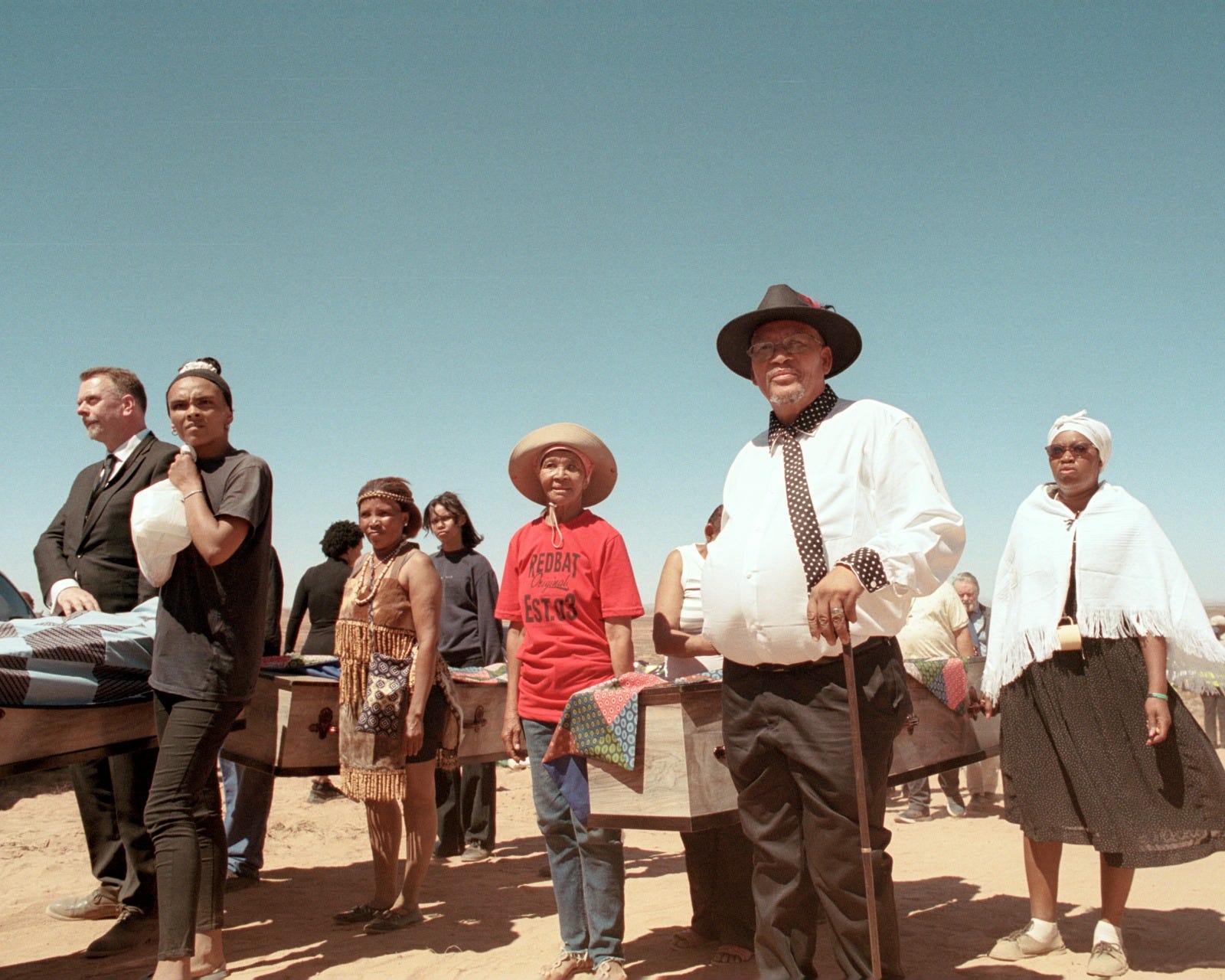
Photo by Micky Wiswedel
The process of re-humanising
It is the reversal of this process that continues, as cardboard boxes are carried from a museum storage room to the coffins soon after. The process of re-humanization, of transforming the remains from museum objects into the ancestors they are.
This is a symbolic, spiritual and physical process all at once. It is one small part of unmaking the still-present legacy of colonialism that is anything but abstract in many poor and destitute communities across the Northern Cape.
In the museum board room the cardboard boxes are placed on top of the coffins. Their labels reveal very little about the people inside. One of them says “Bushman, Male. Murdered about 1910,” followed by the latin names of the bones inside.
Another says: “2 individuals present, 1 is a child and 1 is an infant.”
The only people who have retained their names on the boxes are the ones who dug up the graves.
James Mapanka, the head of the task team declares that the bones themselves will remain in the cardboard boxes which will be placed inside the coffins. The ancestors, he says, should not be disturbed any further.
Another leader thanks the ancestors. For holding space for the communities in the dark years of colonialism and apartheid. For their patience in waiting.
The last night at the museum
And then they go in. Each box wrapped in the skin of a springbok brought by the Khoisan community of Cape Town.
As the screws are turned to close off each coffin, it is impossible not to feel the weight of the moment. Tears stream down the faces of people singing funeral songs. Buchu water is sprinkled in a cleansing ceremony and museum officials, leaders and the rest of us leave the room.
As the sunlight bathes the coffins in the orange afternoon light, a member of the museum staff checks the room one final time.
“It is finally happening,” she says. “They are going home”
After more than a century in boxes on shelves this is the last night the ancestors will spend in a museum.
Subscribe for free to be notified when part 2 is published